
Production line decommissioning
10 Things to consider before you start!
Decommissioning a production line can appear straightforward from a distance. Stop production. Disconnect the equipment. Dismantle the line. Remove the machinery. In practice, considerably more is involved.
A production line is usually connected to utilities, supporting installations, surrounding equipment, building infrastructure and wider manufacturing operations. Machinery may still hold substantial value. Other production lines may need to remain operational. Site-specific HSE requirements must be followed. Transport routes may impose restrictions that affect the dismantling method. Decisions made before dismantling begins can therefore have a significant influence on safety, timing, cost, disruption and asset recovery. If your organisation is preparing to take a production line out of service, these are ten areas to consider before the first machine is removed!
1. Define exactly what is included in the project scope
Every successful production line decommissioning project should begin with a clearly defined scope. It may sound obvious, but a production line often consists of far more than its primary machines. The project may also involve:
- Electrical installations
- Control cabinets
- Pipework
- Process connections
- Auxiliary equipment
- Mechanical ductwork
- Platforms
- Conveyors
- Laboratory equipment
- Supporting structures
- Utilities
- Spare parts
- Tooling
It is important to establish which of these elements are included in the decommissioning scope and which must remain. The required final condition of the production area should also be defined.
Does the client expect only the production machinery to be removed?
Should electrical and mechanical installations also be removed?
Does the building need to be restored to a particular standard?
These decisions should be documented before execution begins. A clearly defined scope improves planning and reduces the risk of discussions or additional work later in the project.

2. Create a complete asset inventory
Before deciding how to dismantle a production line, understand exactly what equipment is present. An asset inventory forms the foundation for several later decisions. For each major asset, relevant information may include:
- Manufacturer/Brand
- Machine type
- Model
- Serial number
- Year of construction
- Current condition
- Dimensions
- Weight
- Installed location
- Utility connections
- Current ownership
- Intended destination
- Documentation resent yes/no
The inventory should also identify what is expected to happen to each asset after removal. Some machines may remain within the organisation. Others may be transferred to another manufacturing site. Some may become available for sale. Equipment with no realistic reuse potential may need to be recycled.
Creating this overview before dismantling helps ensure assets are handled according to their intended next destination. It also reduces the chance that valuable equipment is treated simply as material that needs to be removed.
3. Determine which assets can be redeployed or sold
Production line decommissioning should not automatically mean disposal. Industrial machinery can retain technical and commercial value long after the original production requirement has disappeared. Before equipment is removed, consider four possible routes.
Internal redeployment
Internal redeployment may reduce future capital expenditure and extend the operational lifespan of existing equipment.
Direct sale
A suitable buyer may be able to put the machinery back into productive use.
Alternative sales channels
Scrap and Recycling
These routes should ideally be considered before dismantling begins.
These routes should ideally be considered before dismantling begins. Why? Because the future destination affects how a machine should be documented, dismantled, protected, packaged and transported. A machine intended for operational reuse should normally be handled differently from one destined for recycling.
Common mistake: deciding what to sell after dismantling
Asset value should ideally be considered while the machinery is still installed. At this stage, information can often be collected more effectively. Potential buyers may want to understand:
- Current configuration
- Operating context
- Equipment condition
- Connections
- Supporting equipment
- Machine specifications
If commercially appropriate, documenting machinery before dismantling can support the future sales process. It can also help the decommissioning team understand which components should remain together.
4. Understand every utility connection
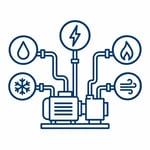
Production equipment does not operate independently. Depending on the process, machines may be connected to:
- Electricity
- Compressed air
- Steam
- Process water
- Cooling water
- Gas
- Vacuum systems
- Extraction
- Ventilation
- Drainage
- Product piping
- Data and control systems
These connections need to be identified before work begins. It is particularly important to understand whether utilities also serve equipment that will remain operational. Disconnecting the wrong service can affect surrounding production areas. Utility isolation should therefore form part of the technical planning and HSE approach rather than being resolved informally during dismantling.
5. Identify site limitations before machinery starts moving
One of the largest machines in a production line may have been installed before surrounding walls, platforms or installations were completed. Removing it years later may therefore be considerably more complex than bringing it into the facility originally was.
Assess the complete removal route. Consider:
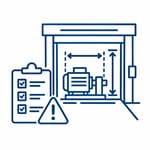
- Door dimensions
- Corridor widths
- Floor loading
- Ceiling heights
- Internal lifting restrictions
- Structural steelwork
- Platforms
- Stairs
- Restricted work areas
- Loading areas
- Crane access
- External transport access
These limitations may determine how machinery needs to be dismantled. In some cases, equipment can leave the facility largely intact. In others, additional disassembly may be required to create manageable sections. Understanding these restrictions before work starts helps avoid discovering critical obstacles after the machinery has already been disconnected.

6. Develop a project-specific HSE plan
Health, safety and environmental requirements are central to production line decommissioning. The environment changes once equipment begins to be disconnected and removed. Activities may involve:
- Electrical isolation
- Machinery movement
- Working at height
- Mechanical dismantling
- Hot work
- Confined areas
- Hazardous substances
- Lifting
- Process residues
- Interaction with ongoing production
- Internal transport
The specific risks depend on the facility, industry, equipment and project scope. A project-specific HSE plan should therefore be developed before execution. It should consider the requirements of the site and the activities involved in the decommissioning process.
The objective is not simply regulatory compliance. Good HSE planning also contributes to predictable execution by establishing clear methods, responsibilities and controls before the work starts.
7. Consider ongoing production
Many production line decommissioning projects take place while the rest of the facility remains operational. This creates an additional planning challenge. The project must progress without unnecessarily interfering with the facility's core activities. Questions to consider include:
Which production areas must remain accessible?
Which utilities cannot be interrupted?
Are there restricted working hours?
Can machinery movements cross active production routes?
Are temporary barriers required?
When can lifting activities take place?
Where can dismantled machinery be stored temporarily?
How will contractors enter and leave the facility?
Close coordination with the site team is particularly important. The decommissioning plan should adapt to operational requirements rather than forcing remaining operations to adapt unnecessarily to the dismantling work.
8. Plan dismantling around the next destination of each asset
There is no single correct way to dismantle a production line. The correct method depends partly on what will happen to the equipment afterwards. For machinery intended for reuse, the dismantling strategy should consider:
- Preservation of critical components
- Labelling
- Documentation
- Electrical connections
- Mechanical connections
- Protection during handling
- Packaging
- Reassembly requirements
Where possible, retaining useful information during dismantling can support future installation. For machinery intended for internal redeployment, coordination with the receiving plant is also important.
What condition does the receiving team expect?
Which components need to arrive together?
When can they receive the equipment?
Are foundations or utilities ready?
Planning both sides of the relocation prevents a situation in which machinery is removed successfully but cannot be installed efficiently at its next destination.
Common mistake: treating machinery removal as the complete project
A production line decommissioning project does not end when the final machine leaves the building. The project should consider the complete journey.
What happens to the machinery?
Has the area been returned to the agreed condition?
Have all assets been accounted for?
Have reusable machines been transferred correctly?
Have commercial commitments been completed?
Has the client formally accepted the result?
Thinking about the complete project from the beginning helps avoid unresolved activities at the end.
Common mistake: involving logistics too late
Machinery can only be transported in the form in which it has been dismantled.
If logistics requirements are unknown when dismantling begins, equipment may need additional handling or disassembly later. This increases complexity!
Transport requirements should therefore be considered before deciding how major machinery will be separated and removed.
9. Resolve packaging, logistics and transport early
Machinery transport should not be treated as something that happens after dismantling. It affects the dismantling plan itself. Large or sensitive industrial equipment may require:
- Specialised packaging
- Protective measures
- Lifting frames
- Dedicated transport
- Export documentation
- International logistics
- Abnormal load planning
- Customs support
The physical dimensions and weight of the machinery after dismantling need to match the available transport options. Site restrictions also need to be considered.
Can the required truck reach the loading area?
Can a crane operate in the available space?
Is temporary storage necessary?
When international transport is involved, documentation and export requirements may also influence scheduling. Coordinating dismantling and logistics as one process reduces unnecessary handling and waiting time.
10. Agree the final site condition before work begins
One of the easiest ways to create disagreement at the end of a project is to leave the final site condition undefined at the beginning. Removing a production line can leave behind:

- Foundations
- Holes
- Electrical connections
- Ductwork
- Piping
- Supporting structures
- Cable trays
- Platforms
- Process connections
- Surplus materials
Which of these need to be removed?
Which can remain?
What restoration work is required?
Who is responsible?
The answers should be established during project planning. A defined handover standard gives both the facility owner and decommissioning team a measurable end point. Once the agreed work has been completed, results and contractual requirements can be reviewed and responsibility for the production area returned to the client.
Curious about your project’s potential?
Whether you're planning to decommission a production line, repurpose machinery, or scale down operations, our proven expertise ensures efficiency, sustainability, and unmatched value. Ready to achieve maximum value for your downscaling plans?
Bonus consideration: establish one clear project owner
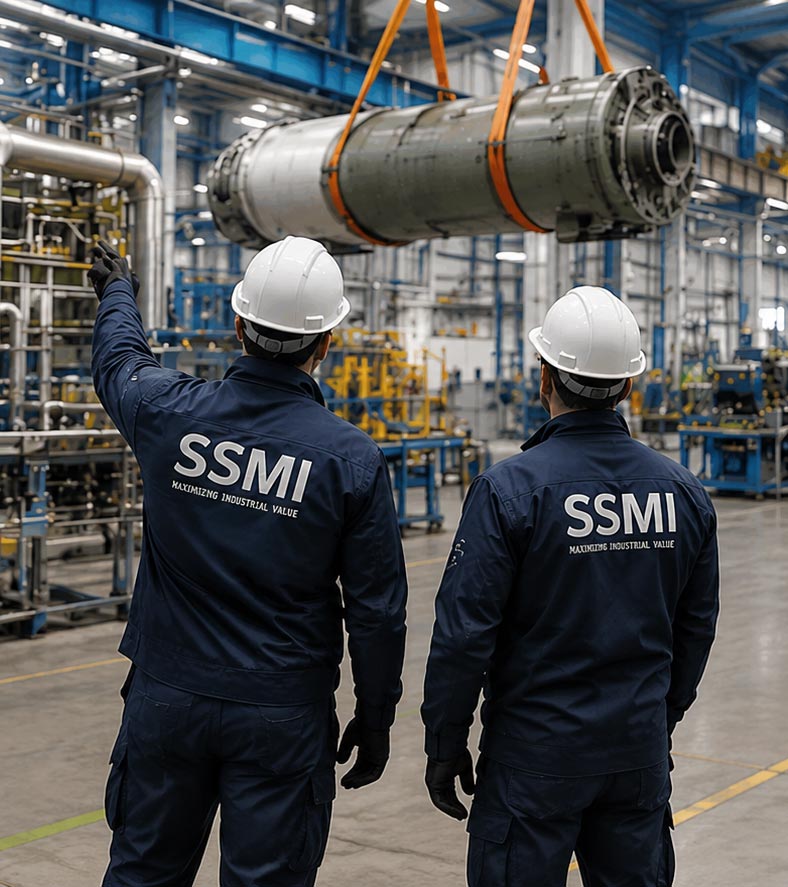
Production line decommissioning frequently involves several disciplines. Dismantling, HSE, logistics, asset sales, recycling, packaging and building restoration may all form part of the same project. If each activity is managed separately, the facility owner may become responsible for coordinating multiple contractors and resolving the interfaces between them. This can create unnecessary complexity. Questions quickly arise:
Who controls the overall timeline?
Who coordinates dismantling with transport?
Who decides when an asset is ready for collection?
Who makes sure reusable machinery is protected correctly?
Who manages scope changes?
Who is accountable for final handover?
Establishing clear ownership reduces ambiguity. For complex projects in particular, an integrated approach can make communication considerably more straightforward.
When should production line decommissioning planning begin?
As early as practical.This is particularly important when:
- Machinery may be redeployed
- External buyers need to be found
- Ongoing production must continue
- Transport is complex
- The facility has restricted access
- International relocation is involved
- A strict completion deadline applies
More preparation time generally means more options. For example, finding a suitable buyer for a specialised machine may require time. An internal receiving facility may need modifications. Specialised transport may need to be scheduled. Production teams may need to coordinate planned shutdown periods. Waiting until the final weeks before closure reduces this flexibility!
A practical production line decommissioning sequence
Although every facility is different, a structured project can generally follow five principal stages.This structure keeps technical, logistical and commercial activities connected throughout the project.
Project intake
Inventory assets, define the scope, understand civil standards, identify assets for internal redeployment and establish the required timeline.
Project plan
Assess site requirements and limitations, prepare the HSE approach, coordinate receiving plants and develop the asset sales strategy.
Disassembly
Dismantle the relevant equipment, remove agreed surplus installations and complete required building restoration activities.
Transport
Package machinery appropriately, manage export requirements where relevant and coordinate specialised transport.
Transfer
Evaluate project results and contractual requirements before returning responsibility for the site or production area to the client
A more circular approach to production line decommissioning
Production lines are often taken out of service because a product, process or facility strategy has changed. That does not automatically mean the machinery has reached the end of its technical life. Equipment may still be able to create productive value elsewhere.
By identifying opportunities for internal redeployment and external resale, organisations can extend machinery lifecycles and reduce unnecessary waste. This is also why decommissioning and asset recovery work particularly well when planned together. One process removes the equipment safely and efficiently. The other determines where that equipment can create value next.
How SSMI supports production line decommissioning
SSMI supports industrial organisations with the decommissioning and repurposing of process machines, production lines and complete manufacturing facilities. We bring project intake, planning, dismantling, packaging, transport, asset recovery and final transfer together within one coordinated project structure.
Our focus is on maintaining clear project responsibility while helping clients manage technical requirements, HSE, timelines, operational disruption and the future value of surplus assets. Rather than viewing decommissioning simply as machinery removal, we consider the complete project from the current operating environment to the next purpose of the site and equipment.


Preparing to decommission a production line?
If your organisation is planning to close, relocate or replace a production line, early preparation can help identify potential constraints and opportunities before execution begins.
SSMI can review the initial scope, assets, site requirements, timeline and potential machinery destinations with your team.
Discuss your production line decommissioning project with SSMI!